Friday, September 8

Milk Please, Fermented not Spoiled

I recently toured the Straus Family Creamery dairy farm in Tomales Bay, an area in northern California most famous for unparalleled farmed oysters (the Hog Island Oyster Company) and the San Andreas fault. Straus is also a happy anomaly and attraction in the area, garnering attention for its pioneering (literally, they were one of the first) organic dairy farming practices as well as its truly amazing milk, cream, yogurt, butter, and ice cream.

I'm not going to do another "atta boy" article about how Straus is doing things right by stewarding the land and making a profit (although after you hear their pitch, you get this feeling that doing elsewise is just loco as well as irresponsible). Instead, I learned a great deal about cows and making yogurt, and that's what this post is about.

What Is Milk? Why do we care?
Let's not forget, milk is what cows feed their young. For this reason, it contains a mix of nutrients, sugars, and fats balanced for nurturing calves that's also (and very fortunately) a versatile raw material for making a huge range of wonderful foods. After years of careful selection, cows have been transformed from efficient grazers into extreme lactators. If lactating were a sport, Holsteins would win for their productivity, and Jerseys for their higher butterfat content. Straus uses a mix of both breeds to balance their herd.

A Quick Bit About Organic
Unlike conventional industrial farms, Straus feeds their cows exclusively on organically fertilized pasture grass, organic silage (carb-rich green plants), and some extras like corn, peas and soybeans. Since this blog has been obsessed with all kinds of fermentation processes, I'll just take a moment to say that silage is fermented green grassy plants and legumes often including grass, sorghum, oats, vetch, and alfalfa.

To make silage, fresh plant material gets chopped, packed tightly into a pile, and covered. The moist, anaerobic environment incubates acetobacter and lactobacter perfectly, which digests the complex carbs and sugars. As the digestion progresses, the pH lowers (acidity rises) to a point where unwanted rot can't get started. At Straus I had the opportunity to smell the fermenting silage. It was unmistakably vinegary. Cows find it appetizing, and why not?

Yogurt is Spoiled Milk
Not everyone likes milk--on cereal or otherwise. I happen to be one of these people. Ice cream, yogurt, cream, and butter on the other hand, are entirely different stories. Yogurt has great advantages, however, because it lacks lactose (which can cause distress if you're unable to bust it up in your gut), tastes great, and it comes in fat-free varieties.

To make yogurt, you have to start with pasteurization. Everybody knows milk gets pasteurized to kill unwanted bacteria, but what you may not know (I didn't) is that there's more than one method--and the method impacts the flavor. At Straus they heat their milk to around 161 degrees for 15 seconds, then quickly chill it; it's the second slowest method that's considered safe. In most commercial milk production operations, by contrast, milk is heated to 191 degrees or hotter for as little as a second. According to Straus and many other experts, the higher heat deadens not only the dangerous flora, but the delicate flavors, so slower is better.

After pasteurization, the milk gets inoculated with helpful lactobacter and other friendly microbes--there's a "weeding the garden and replanting" metaphor in there somewhere, and the happy outcomes are many: digestion of the lactose in the milk, flavor development, and texture changes.

Yogurt and Silage Have a Lot In Common
In the same way that the lactic acid prevents unwanted spoilage of silage, the low pH of yogurt protects it from unwelcome bacteria getting a foothold. This doesn't mean yogurt is bullet proof. In the words of our Straus tour guide, and I paraphrase, "You can't technically spoil yogurt, because it's already spoiled, but you can spoil it more if yeasts and molds get in."

In addition to controlled spoiling, the acidity denatures (basically cooks) the milk proteins in a consistent and orderly fashion, causing them to tangle and thicken the texture uniformly. In another recent post I talked about denaturing proteins in relationship to tenderizing meat, so if you're interested check it out.

Manufacturing Matters
Thickening via acid, however, only takes the texture so far. To get that creamy mouth feel that separates yogurt from kefir, especially in non- and low-fat varieties, additional steps are required. In commercial manufacturing processes, milk solids in the form of dried or evaporated milk, gums and pectins are added. There are even laws governing total milk solid percentages.

The upshot? If your yogurt is bouncy, super shiny, or sticky you're most likely eating tree sap or pectin along with powdered milk. Most commercial yogurts are fermented right in the little cup that you buy, so everything has to be in the mix when the cup's filled. It's easy to see why they might want to use thickeners to ensure a consistent--if not totally desirable--end product.

At Straus, rather than making the yogurt in the cup, they make it in a vat. Instead of adding non-dairy thickeners or powdered milk solids (which are scarce if you're looking for organic sources), they reduce the water content through a process called reverse osmosis. Aside from being an interesting tidbit that won me a free quart of yogurt in a friendly "pop quiz" at the end of our tour, you care about that fact for one good reason: it's one of the best ways to extract excess water without changing the flavors because there's no heat involved. And heat, as we discussed in the pasteurization part, deadens the flavor of milk.

Reverse osmosis is really just superfine filtering--mainly water passes through a semi-permeable membrane, but most everything else doesn't. This concentrates the milk solids, increases the thickness, and does no harm to the taste of the milk.

Try Some
If you want to try Straus product, look for it at Whole Foods or other uppity and/or swishy food sellers. Straus costs almost double it's conventional counterpart so get ready for sticker shock. In my mind, though, the care they take of their herd, their land and nearby Tomales Bay, added to the truly remarkable quality of their products, makes it more than worthwhile.

Thursday, August 24

No Syrup is an Island

If you were like me, when you were little you got a big charge out of dad making you a Shirley Temple or Roy Rogers while the grown-ups were sipping Martinis and lounging in their Pucci's and Sans-a-Belts on the lanai. Or even better, getting one from the bartender at the local steak house.

The fancy glass tumbler with no Hamburgler or Scooby on it, the especially slim straw, and the flamboyant cherry were as intoxicating to the 8-year-old me as the booze was to my parents and friends. And while as an adult you may have turned your back on sugar-and-color-doped Ginger Ale or Coke garnished with a radioactive cherry, the occasional Tequila Sunrise or Planter's Punch on a hot afternoon can be perfect. Key to all of these alcoholic and non-alcoholic confections is grenadine syrup.

The Origin
The name grenadine derives from the French word grenade, meaning pomegranate, and true grenadine syrup is made from its acidic and slightly tannic juice (although in its corner-store incarnation, it's little more than citric acid, corn syrup, and redness). At the end of this post, you'll find a recipe for making your own . If you have any love for pomegranate, give it a try: it's not hard to make, and the result is completely different from what you buy in a bottle at the liquor store. If you want the good stuff but don't feel like having pink fingers for three days, you can also try #8 on the product list of the Sonoma Syrup Company.

What's in a Name?
The name doesn't, as you may have heard, derive from the name of the Caribbean Islands, the Grenadines, nor does it originate from some complication of their southerly neighbor, Grenada (that was the island on which Reagan declared a "noncombatant evacuation operation" to "save" medical students in 1983). One unsubstantiated theory holds that French explorers found the shape of the island to be reminiscent of a pomegranate. And while there's a potential legal fight a-brewing over which island might get to call the product "Grenadine Syrup" with a capital G (if either Grenada or any of the Grenadines ever decide to manufacture it), grenadine isn't currently made anywhere in the Caribbean, nor are pomegranates grown, which require cooler climes to flourish.

The Pomegranate
Pomegranates are the fruit of a shrubby deciduous tree and were brought to Europe from Asia via the Roman empire. They were subsequently toted to the new world by the Spanish, and as a result, can be found in lucky backyards across California and other temperate states. They've got tough rinds, which were once tanned and used for leather by the Romans, and curiously (and uniformly) bear 840 seeds per fruit. They're related to the tree that bears Allspice (the Pimenta tree), Syzygium that bears clove, and the Eucalyptus tree--a very flavorful family indeed.

Making Grenadine
Before diving in, here are a few notes and observations about recipes you're likely to find. Many call for putting the pomegranate seeds into a blender or food processor. This method releases juice, but pomegranate seeds are fairly bitter, and the more you abuse them, the harsher the resulting effluvium will become. Not necessarily a bad thing, but something you may want to watch carefully if you decide to use a machine.

If you want to limit seed damage, the best approach is to mix them in a bowl with sugar, cover with saran wrap, and press the mixture patiently with the bowl of a ladle or the bottom of a mug. Put it in the fridge overnight to macerate, then press the sugary pulp through a strainer to capture the juice and separate the seeds.

Homemade Grenadine
For this recipe, you'll need a strainer with fine mesh, or a regular one with cheese cloth added, although it will absorb some of the precious juice. Also, you may want to wear latex gloves or your fingers will be pinkish for several days.

Take two large pomegranates, split them crosswise and remove the seeds with a dull paring knife. Be careful not to grab any of the pulp, which can be bitter. This is a long and tedious process--I won't lie to you.

Mix the seeds (all 1680 of them) with a cup of sugar in a medium mixing bowl. Cover the seed and sugar mixture loosely with saran wrap and then pound with a solid ladle, a hefty mug, or similar object until the seeds break and the mixture becomes pulpy. Next place the whole thing in the fridge and forget about it overnight. The waiting is key.

Run the pulp through a fine mesh sieve or a larger mesh with cheesecloth to separate all of the juice from the seeds and pulp over a saucepan. When you've gotten as much juice as you possible can out of the pulp, add a half of a cup of water and heat on low. Raise the temperature to 200 degrees (keep it below the boil) for 15 minutes to kill any bugs, cool, bottle and refrigerate.

Best Tequila Sunrise
If you think you like this cocktail now, wait until you try it with homemade grenadine. For this recipe, you'll need ice and a highball. Use any tequila you like--the high sugar and acid content of this drink will cover an average tequila's tracks pretty well. But then again, good tequila is good tequila.

2 oz Tequila
4 oz Orange Juice
1 oz Delicious homemade grenadine

Fill the highball with ice and pour the tequila and orange juice over the top. Stir and let things settle for a couple of seconds. Now dribble your homemade grenadine into the glass over the back of a spoon. The heavy syrup will collect on the bottom and slowly spread color up through the orange juice, creating the sunrise effect.

Save This Page

Monday, August 14

Try a Little Bitterness

New York City's Pegu Club proves that bitterness has its place, and it's in your cocktail glass. Along with napkins and swizzle sticks, Pegu's bar proffers vials of flavorings, including a variety of bitters as cocktail condiments. When splashed judiciously into gin, rum, or whiskey drinks, bitters can add mystery and interest for the nose and greater depth across the palette. Pegu patrons are encouraged to customize.

What's Bitter?
Bitters are a branch of the family of loosely related herbal and fruit alcohol infusions called liqueurs. Concentrated bitters are used as flavorings for other things, while sweeter, lighter ones survive mainly in Europe as meal-starters called aperitifs. The herbal contribution to the bitter liqueur may be achieved by literally soaking herbs in alcohol, or by distilling them to some degree or another along with other ingredients.

Bitters intended to flavor other things can be up to 45% alcohol and come in small shaker bottles. The best-known brands, Angostura and Peychaud, get their punch from an alpine flowering plant called gentian. You may have had the pleasure of gentian without realizing it: it's that potent, vegetal flavor in Moxie cola (the original one). There are many other kinds of bitters, including some made from orange peels, maraschino cherries, and anise.

Sidebar: There's a rumor that Angostura bitters contains extract from the bark of a tree of the same name. Not true, claims the manufacturer and Webtender. Rather, Angostura is the name of the town in Venezuela (now Ciudad Bolivar) where it was invented in 1824 by Dr. J. Siegert, a German adventurer who spent 4 years concocting it in order to bolster the vigor and stamina of his troops.

Meal Starter, Ailment Stopper
Aperitifs, literally "openers", are traditionally consumed prior to a meal in order to prepare the mind and body for nourishment. According to Harold McGee, there's evidence that alcohol does in fact stimulate digestive accuity, and the romans employed this philosophy with gusto. Campari and Vermouth are both examples. The most shockingly strong one--at least in my experience--is Cynar, an Italian, artichoke-based liqueur that's dark green and menacing (but in a good way) on the palette.

How to Use Bitters
Bitters of the concentrated flavoring variety are commonly used in cocktails, the best known of which are the Manhattan, Planters Punch, and the Old Fashioned. But here's one you might not have tried. It's perfect summer-cocktail fare based on one of my favorites, the Mojito, but with a dark rum, Carribean twist.

Best Mochito Recipe
For this recipe, you'll need a collins glass and a muddler.

Ingredients:
1 Lemon half
Five or six fresh, lush, large mint leaves
4 ounces of dark, Jamaican or Trinidadian rum such as Mount Gay or Myers (for a complete list, check out this helpful About.com rum round-up)
Ice
Soda water
Angostura Bitters

Juice the lemon half into the pint glass and add the rind. Add the mint leaves and muddle well. The mint leaves should be darkened by being bruised but not in pieces. Next add ice, rum, and then fill the collins glass with soda water and shake 8 drops of bitters onto the top. Enjoy!

Tuesday, August 8

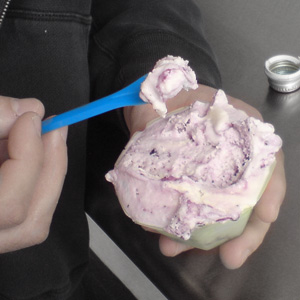
Yucky, Sticky Homemade Ice Cream

During the warm summer months, gadget retailers trot out their latest colorful, charmingly designed home ice cream makers. The price point is usually around $40-$50, and they consist of three main parts: a tub or ring you put in the freezer, some kind of paddle for churning, and a motor housing.

Unfortunately, the finished product you get from these machines is usually somewhat sticky from the standpoint of texture and "muddy" flavor-wise. If you're looking for a super clean, crisp peach or raspberry fruit flavor, for example, don't bother with these devices. Here's why.

Eggs
Check out the recipes that come in the box with one of these inexpensive home machines. You'll find titles like "French Vanilla" or "Chocolate Decadence." While many of the ingredients may vary, they all typically call for egg yolks, or start with a base that contains them (which explains these purple references to richness). Unfortunately, egg yolks also contribute egginess, which when paired with vegetal and delicate flavors, can be a questionable virtue. So why do we need egg yolks, anyway?

Creamy, Not Crummy
From a “what’s in it” standpoint, ice cream is simple: cream, sugar, and flavorings (in home recipes, those ever-present egg yolks, too). To some degree, however, the ingredients aren’t really the most important thing; it's how they hold themselves together when frozen and churned. The spinning blade and freezing cold transform the structure of the parts into something that's truly noble: smooth, melting, and velvety. And as many of us are painfully aware, fat delivers flavor very effectively. Whether it's in Doritos or ice cream, the fat makes it good, and ice cream has plenty of it: about 10-20% milkfat.

What's Up in the Tub?
Technically, ice cream is both an emulsion (things that don't want to hang together are cajoled into it, such as in creamy salad dressings or plain milk) and a foam (things that contain tiny bubbles trapped in a membrane that won't let them easily escape, such as in whipped cream and beaten egg whites). To you and me, this boils down to a luxurious mouth feel, a unique texture that has body yet melts away perfectly, and a wallop of flavor on your milkfat-lubricated palette.

The presence of the sugar and salts naturally occurring in the cream mixture makes it impossible for all of its water to freeze, just like salt on the driveway. Some of the water in ice cream remains liquid, and the fat from the cream, lubricated by the liquid water, jostled by ice crystals, and beaten mercilessly by the churning blade forms a network of loosely confederated fat droplets. This network is key: it creates the structure of the ice cream, and provides the to-die-for texture.

Why Yolks?
Most homemade ice cream recipes start with a base that calls for cooking egg yolks with cream at very low heat to create a thin custard. After being cooled to refrigerator temperature, this custard gets churned. Cooking is advised to sterilize the raw egg, but if you buy pasteurized eggs, this step really isn't necessary.

Fat and water magnetically repel each other in their natural state (think oil and water). However, when egg yolk is added, it acts like free cocktails at a work party, allowing the fat and water to sit next to each other without undue stress. Without this ambassador of molecular peace, all kinds of havoc can take place, including separation of the ingredients and poor texture. The problem, of course, is that egg yolks also contribute plenty of eggy goodness (or badness, depending on your tastes) and additional fat.

Getting Around the Eggy?
In commercial ice cream, the job of emulsifying is entrusted to chemicals like Polysorbate 80, which contributes little or no flavor. There's also quite a bit that can be done from an industrial process perspective, such as super-fast and super-cold freezing to regulate the formation of ice crystals. These methods simply aren’t available in the average home, although some machines, such as this Cuisinart model, do a better, faster job of freezing (they cost around $250) than the usual sort.

The bottom line? If you're looking for something clean on the palette to carry the fruit, tea, or other delicate ice cream flavors you've been dying to make, you might want to look at something more expensive by way of an ice cream maker than the typical summer special unit. If you like French vanilla, caramel, chocolate, or other flavors that harmonize with eggs more cozily, go ahead and get that home ice cream maker. They're also good for sorbets and ices.

Thursday, July 27

Petal Lust

Flowers look great on the dining table--deep fried, dragged in melted butter, or arranged on a field of salad greens or a cool frosting plateau.

Prickly Situation
Artichokes, also known as Globe Artichokes, belong to the same family of flower as the Scotch Thistle. The base of the inner leaves and the cup-like structure that supports what eventually matures into a giant thistle-like flower (the heart) are the parts you eat. The mass of filaments packed on top of the heart, the choke, is the part that blossoms, and has to be scooped out in larger specimens before eating. In small artichokes, you can simply trim off the fibrous leaf ends and eat the entire thing, choke and all.

Squashed Hopes
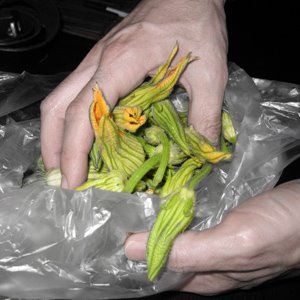
Squash blossoms are the flowers of the zucchini and summer squash. These vegetables are technically fruit, just like the tomato, because they are the seed-bearing structures of the plant. There are also male blossoms, which can be harvested and eaten without reducing your crop. You can tell the male blossoms by their thin stems. Female blossom stems are thicker. Squash blossoms are often lightly battered and deep fried, sometimes with a stuffing of some kind. But they can also be sauteed simply with butter. They have a delicate, fresh squash-like flavor and aroma.

Fast Food
Technically not part of the lily clan (such as tiger, easter, etc.), daylilies bear a superficial resemblance to their more ornate doppelgangers. Daylilies open their flowers during the day only to have them wither at night and replaced the next day by fresh ones. Their dried flowers are used in Chinese medicine as well as cuisine such as hot and sour soup and mu shu pork. True lilies such as the tiger lily are poisonous to cats. Daylilies are not.

Strike the Posie
There are a bunch of flowers that you don't cook, don't have a lot of flavor, but sure dress up that bag of prewashed salad greens you're serving to the wife's boss. Nasturtium, pansies, rose petals (white part removed), and pot marigold petals are just a few of these varieties. One warning: although they look gorgeous, pesticides are employed with reckless abandon on flower farms, which is bad for both the environment and the people who have to work there. So be sure you're buying organic flowers to feed your family and friends, not the kind from the local flower shop.